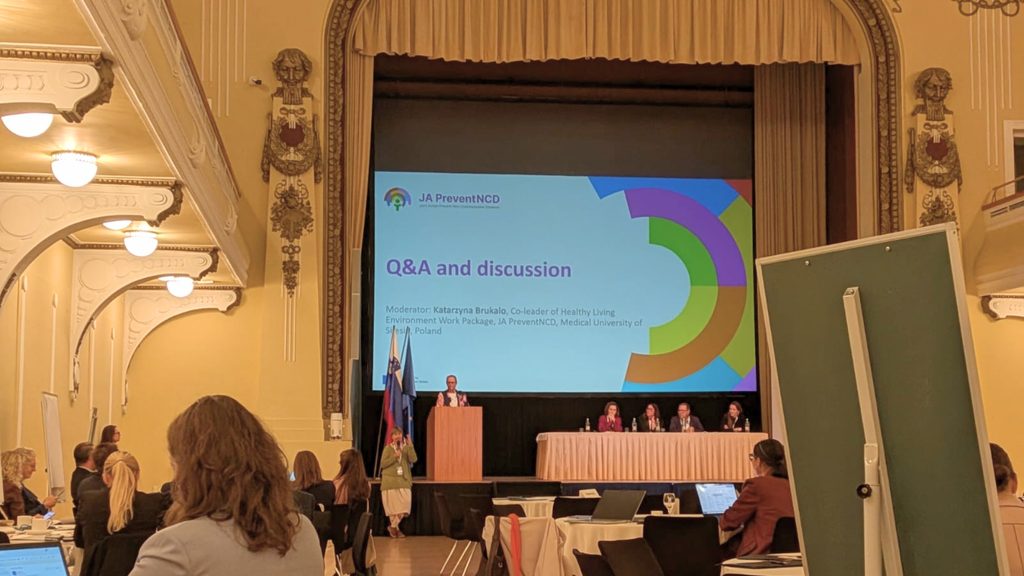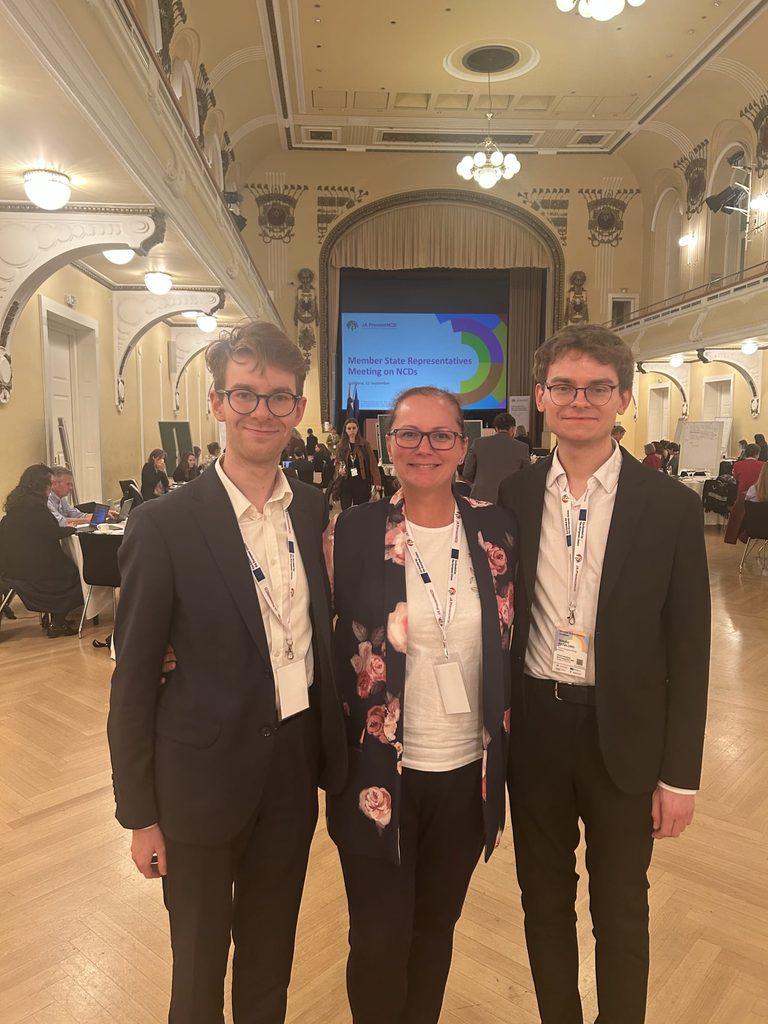
On 22-23 September 2026, a meeting of representatives of the Member States dedicated to the future of noncommunicable disease prevention in Europe was held in Ljubljana. Katarzyna Brukało, PhD, Associate Professor at the Medical University of Silesia in Katowice, actively participated in the event.
One of the main objectives of JA PreventNCD is to reduce the fragmentation and duplication of efforts undertaken across countries, as well as to support national authorities in identifying, implementing, and developing effective preventive solutions. The meeting in Ljubljana provided an opportunity to jointly discuss specific measures related to the key factors influencing health, including diet, physical activity, sleep, tobacco and nicotine use, and alcohol consumption. The discussions also covered issues extending beyond individual lifestyle choices, such as education, living conditions, safety, transport, social and health inequalities, and the creation of environments in which healthy choices are easier and more accessible.
During the opening of the meeting, attention was drawn to the importance of prevention not only for the health of Europe’s population, but also for the stability of healthcare systems and the economy. It was emphasized that effective disease prevention can help reduce future healthcare costs, increase workforce participation, and support productivity. As highlighted during the meeting, every €1 invested in prevention may generate a return of €14 through reduced healthcare costs and increased productivity.
The discussions also took place in the context of the European Health Union and European initiatives such as Healthier Together, Europe’s Beating Cancer Plan, and the Safe Hearts Plan on cardiovascular health. Attention was drawn to the need to integrate efforts addressing cardiovascular diseases, cancer, and other noncommunicable diseases with policies targeting their common risk factors and the broader determinants of health.
Key areas of discussion included measures related to providing information about food and its degree of processing, reducing inequalities in cardiovascular disease, expanding preventive screening, and strengthening the regulation of tobacco and nicotine products. The participants also discussed how to maintain and further develop European cooperation in the field of prevention after the current projects come to an end.
Katarzyna Brukało, PhD, Associate Professor at the Medical University of Silesia, moderated a thematic session dedicated to empowering consumers by providing information on the degree of food processing in the European Union. The session covered three interconnected areas: portion sizes, improving the nutritional composition of food products, and developing food profiling models that can provide a scientific basis for various nutrition policies.
These solutions can support more coherent measures concerning, among other things, food labelling, product reformulation, restrictions on the marketing of unhealthy food, public procurement, and tax policy. Providing information on the degree of food processing is also one of the actions envisaged under the EU Safe Hearts Plan.
Healthy eating should not depend solely on individual knowledge, motivation, or willpower. Everyday choices are also shaped by the food environment, including the information available on packaging, the composition of products available on the market, the portion sizes offered in restaurants, shops, and food delivery apps, as well as the availability of healthier options.
Most countries do not yet have detailed regulations or monitoring systems in place concerning portion sizes in the food service sector and digital food delivery services. At the same time, better management of portion sizes can support the prevention of overweight and obesity, help consumers make informed choices, and reduce food waste.
This is why action is needed at both the national and European levels. Common standards, comparable data, and the exchange of experiences between countries can help develop more effective nutrition policies. Their aim should be to shape the environment in such a way that healthy choices become easier, while ensuring that responsibility for health does not rest solely with the individual consumer.
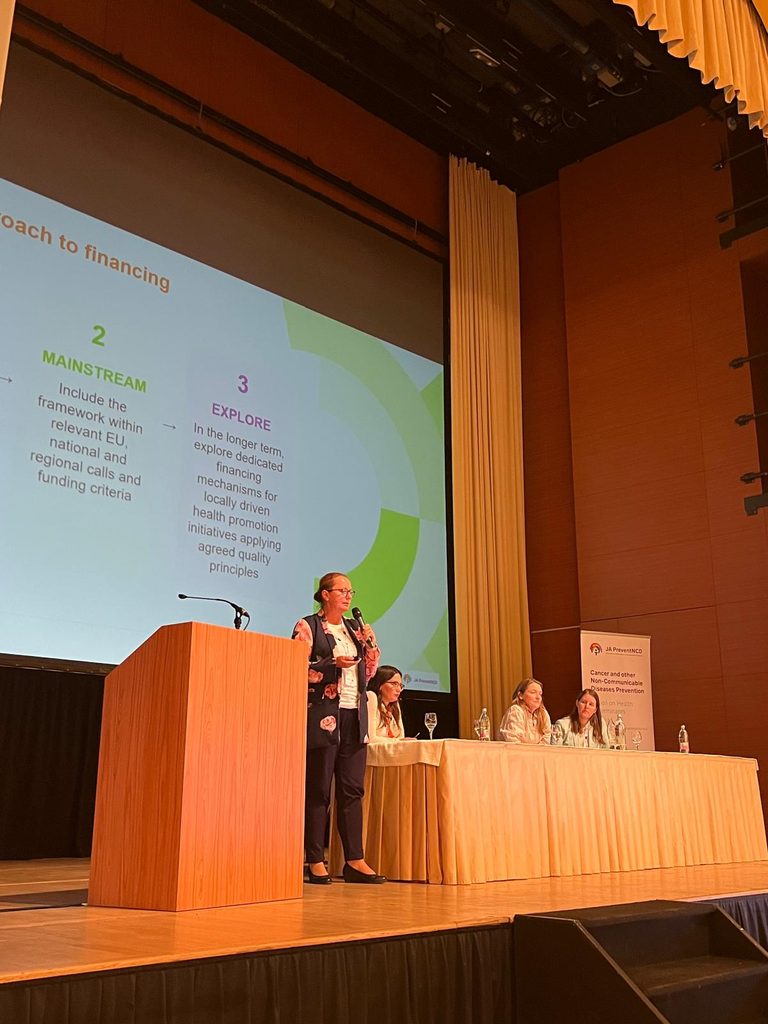
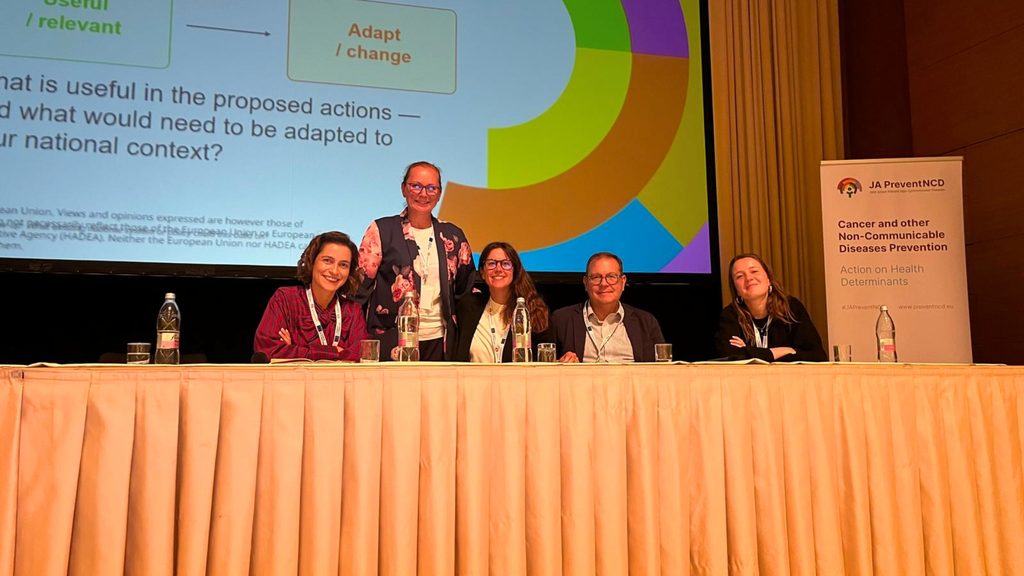
During the next thematic session, dedicated to promoting well-being and health equity in local communities, Professor Brukało presented the concept of a standardized European framework for health promotion. The proposed solution includes a practical guide and a Europe-wide interactive digital platform designed to support the development of competencies. The guide is intended to provide a structured, step-by-step approach to planning, implementing, evaluating, and sustaining local health initiatives. The platform, in turn, is intended to facilitate the use of this approach by providing practical tools, exercises, checklists, examples of implementation, and experiences gathered from different countries.
The initiative is designed to support cities, municipalities, organizations, health promotion practitioners, and local communities in creating environments that promote health. It is not intended to impose the same actions on all communities. Rather, the aim is to establish common quality standards for how local initiatives should be planned, co-created with residents, implemented, evaluated, and further developed. The approach is based on three fundamental principles: cross-sectoral collaboration, meaningful community participation, and the consideration of health equity.
The approach is currently being used in 48 local health promotion initiatives across Europe. The experience gained from their implementation is expected to help further refine the guide and platform so that they respond to the real needs of people working in local communities. Such a solution can facilitate the planning and implementation of activities that support residents in taking care of their health, reduce inequalities, and strengthen local capacities and cooperation. Health is created not only within healthcare facilities, but also in the places where people live, learn, work, travel, and spend their free time.
The meeting also provided an opportunity to speak with the Polish representatives of the JA PreventNCD Youth Advisory Group, Mikołaj Patalong and Aleksander Sobczyk. The group brings together people aged 18 to 35 from more than 25 European countries. Its role is to incorporate the diverse experiences and perspectives of young people into the project's activities related to the prevention of cancer and other noncommunicable diseases, reducing risk factors, and shaping the determinants of health. The group’s members come from a variety of academic, cultural, linguistic, and social backgrounds. This enables them to provide insight into how proposed solutions are perceived by young people and what barriers may make it more difficult to lead a healthy lifestyle.
One of the main topics on the second day of the meeting was the use of modern technologies in health prevention. Experts and representatives from European countries discussed how artificial intelligence, mobile applications, online consultations, wearable devices, and other health-monitoring tools can support the prevention of noncommunicable diseases. Digital technologies increasingly make it possible to monitor physical activity, blood pressure, heart rate, blood glucose levels, and sleep. They can also support the earlier identification of people at increased risk, the delivery of more personalized preventive interventions, and long-term care and rehabilitation.
As part of JA PreventNCD, digital solutions related to risk assessment and stratification, lifestyle change support, improving quality of life, and shared decision-making between patients and healthcare professionals are being tested. These include online programs focused on nutrition and physical activity, tools supporting tobacco and nicotine cessation, digital cancer rehabilitation programs, solutions facilitating risk assessment, and applications supporting patients, people who have completed treatment, and their caregivers.
Technology, however, is not a solution in itself. Digital solutions must be effective, safe, understandable, and genuinely accessible to people with different needs and abilities. It is also essential to ensure data protection, transparency of the algorithms used, appropriate training for healthcare professionals, and measures to prevent digital exclusion. Technology cannot replace healthy habits, human contact, or professional healthcare. It can, however, improve access to prevention, support the earlier identification of health risks, and help tailor interventions more effectively to the needs of specific individuals.
The final part of the meeting focused on the future of European cooperation on noncommunicable diseases and the use of the results of JA PreventNCD after the project comes to an end. Participants discussed possible mechanisms for continuing the exchange of knowledge, coordinating policies, and developing joint initiatives. Among the solutions considered were structures for cooperation between experts and representatives of Member States, the use of existing European groups and networks, cooperation with the World Health Organization, and the continuation of selected initiatives through future projects.
Long-term improvements in the health of Europe’s population require more than individual campaigns or short-term projects. What is needed are stable structures, shared data, consistently developed policies, and cooperation across sectors, countries, and different levels of governance. The meeting in Ljubljana demonstrated that effective prevention begins with knowledge, but cannot stop there. It must lead to the creation of conditions in which taking care of one’s health becomes easier - regardless of where people live, their income, age, or abilities.