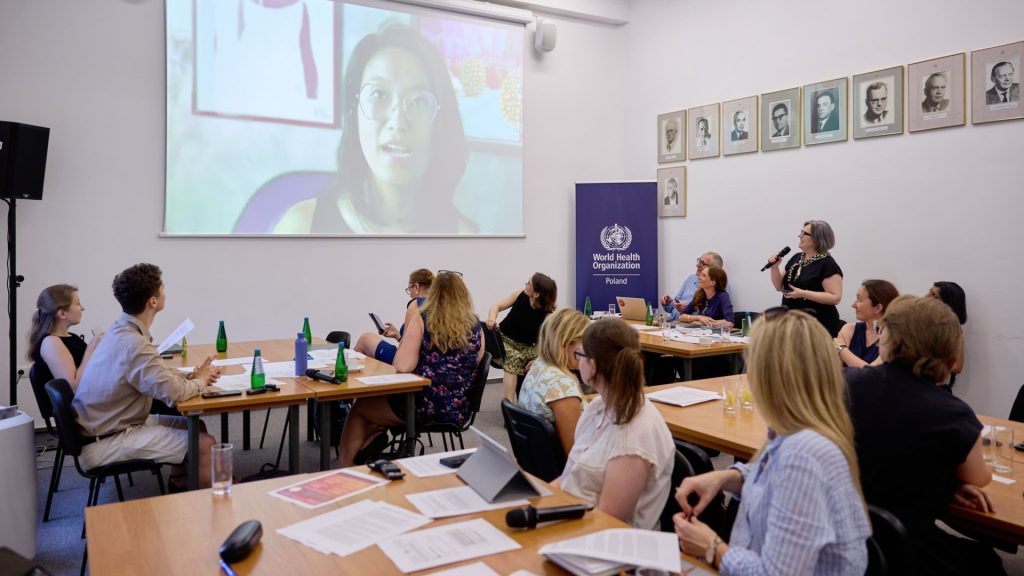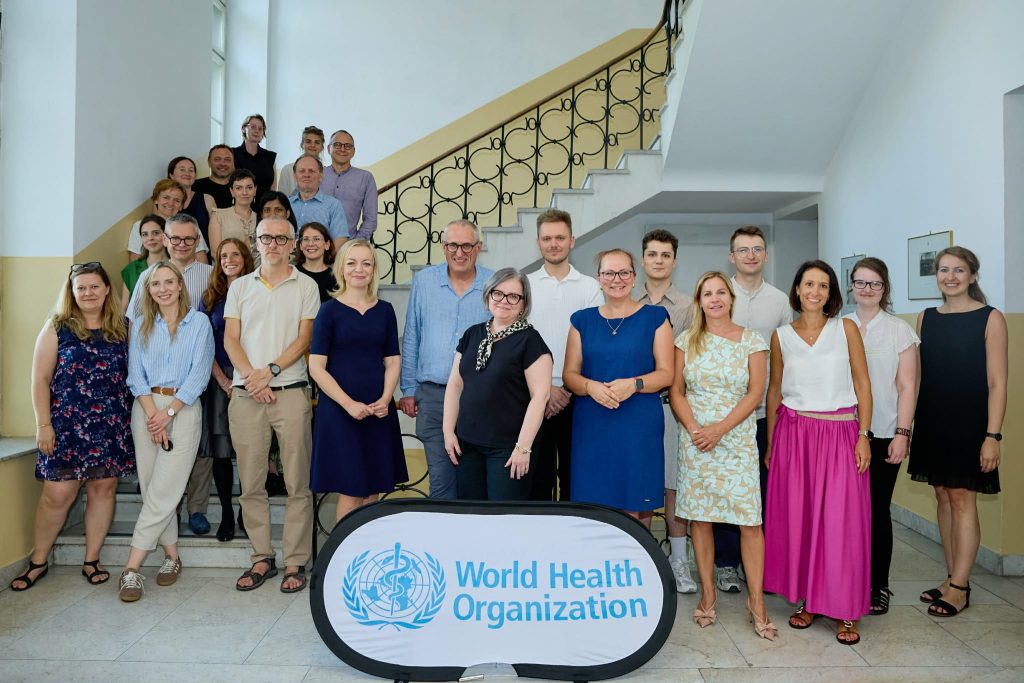
On 29-30 June, an international pilot Training of Trainers (ToT) workshop dedicated to protecting public health from the influence of commercial interests took place. The event was organised within the framework of the JA PreventNCD project in cooperation with the WHO Country Office in Poland and the WHO Regional Office for Europe.
On behalf of the Medical University of Silesia, Assoc. Prof. Katarzyna Brukało, PhD, was actively involved in organising the training and also participated in the event as a speaker.
The training was held at the National Institute of Public Health NIH – National Research Institute (NIZP PZH – PIB) in Warsaw and brought together representatives of public administration, academia and public health institutions. Participants included representatives of the Ministry of Health, the Ministry of Finance, the Chief Sanitary Inspectorate and the National Centre for Prevention of Addictions.
The aim of the training was to strengthen capacities in developing transparent public health policies and reducing the influence of commercial interests on decision-making processes. Participants discussed, among other topics:
- commercial determinants of health and their impact on population health,
- actions undertaken by businesses to influence public policies,
- the role of science and scientific evidence in decision-making processes,
- building transparent and accountable governance frameworks and preventing conflicts of interest.
The workshop had a strongly practical focus. Participants analysed good practices, exchanged experiences, explored available tools and discussed solutions that could support their effective implementation in everyday practice.
The training was a pilot and was the first initiative of its kind implemented in the WHO European Region. It represents an important step towards more effective prevention of noncommunicable diseases and the development of stronger and more transparent public health policies.