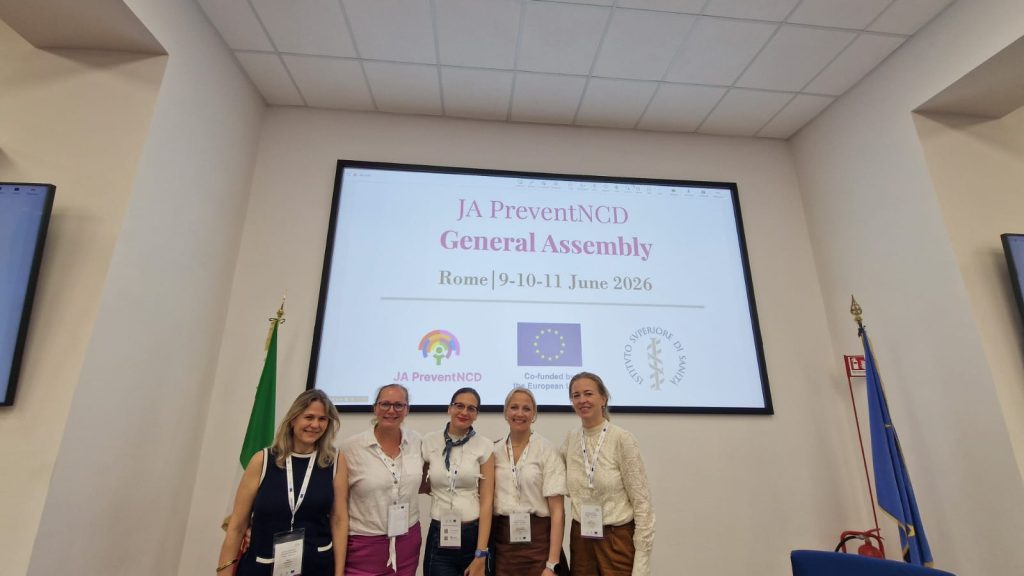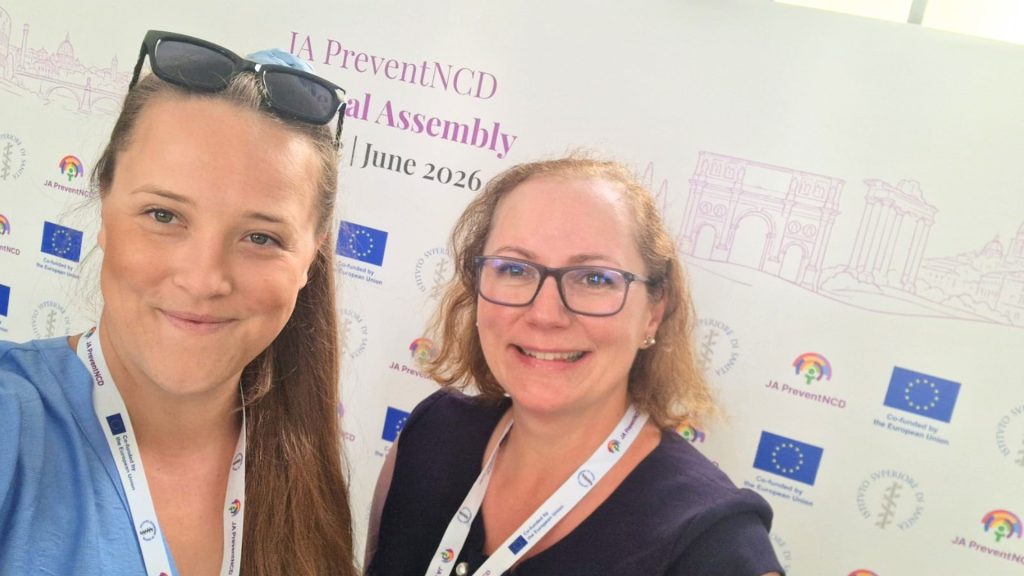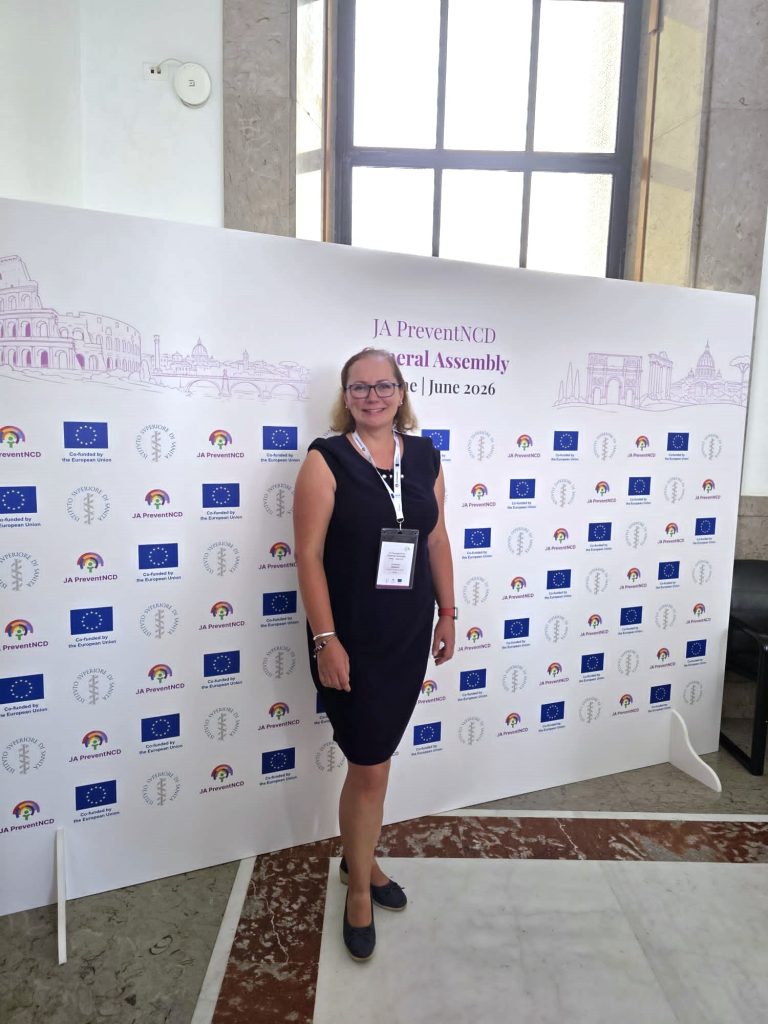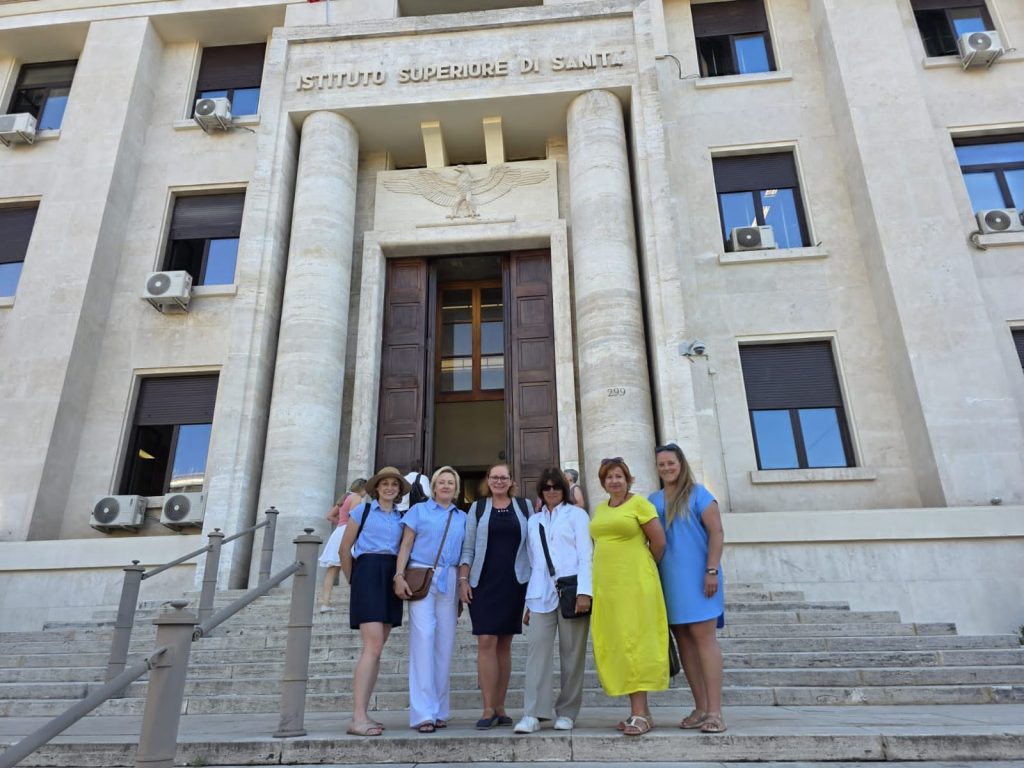
From June 9 to 11, 2026, the annual General Assembly meeting of the JA PreventNCD project took place in Rome. The event was hosted by the Istituto Superiore di Sanità – the Italian National Institute of Health, one of the most important public health institutions in Europe, engaged in scientific research, health monitoring, preventive actions, support for health policies, and scientific coordination at both national and European levels.
The event was attended by public health leaders, policymakers, scientists, and project partners from across Europe. Last year, Katowice hosted the event, while this year the Medical University of Silesia was represented at the meeting by Katarzyna Brukało, PhD, Associate Professor at the Medical University of Silesia, and Anna Lempart-Rapacewicz, PhD. The meeting was also attended by representatives of the Polish project partners, the City of Rybnik and the City of Zabrze.
The General Assembly took place at an important moment for European health policy. The European Union is currently strengthening actions in the area of cardiovascular health, while continuing work related to the prevention of cancer and other non-communicable diseases.
As Dr Giovanni Capelli from the Istituto Superiore di Sanità emphasized:
"Welcoming colleagues from across Europe to ISS in Rome is both a pleasure and a responsibility. Prevention depends on cooperation, shared evidence and the ability to learn from each other’s experiences. This General Assembly is an opportunity to bring that European collaboration to life and to show how Italy can contribute to stronger action on the determinants of chronic diseases.”
The JA PreventNCD project, co-funded by the European Union under the EU4Health programme, is implemented with the financial support of the European Union in the amount of EUR 76 million. Its aim is to support European countries in developing preventive policies, improving the monitoring of non-communicable diseases and their risk factors, reducing health inequalities, and engaging key stakeholders in public health actions.
JA PreventNCD Project Coordinator Linda Granlund highlighted:
"Prevention works, and we know many of the actions that can make a difference. The challenge is to implement them consistently and at scale. JA PreventNCD brings together 25 participating countries and more than 100 partners across Europe. By connecting knowledge, experience and implementation across countries, we can help make the whole greater than the sum of its parts and turn evidence into stronger prevention policies and healthier environments."
Non-communicable diseases remain the leading cause of death and disability in Europe, placing a significant burden on individuals, health systems and economies. Therefore, health promotion and preventive actions are widely recognised as the most cost-effective ways of addressing these diseases and their underlying risk factors.
The first day of the meeting focused on reviewing the progress achieved within the project and addressing the most important challenges related to the prevention of non-communicable diseases in Europe. The plenary sessions covered topics including:
- the use of scientific evidence to develop effective health policies,
- modern cardiovascular disease prevention strategies aligned with the Safe Hearts Plan,
- new initiatives supporting public health,
- reducing health inequalities at local, regional and national levels,
- the new JA PreventNCD campaign,
- actions implemented at the community and local government levels.
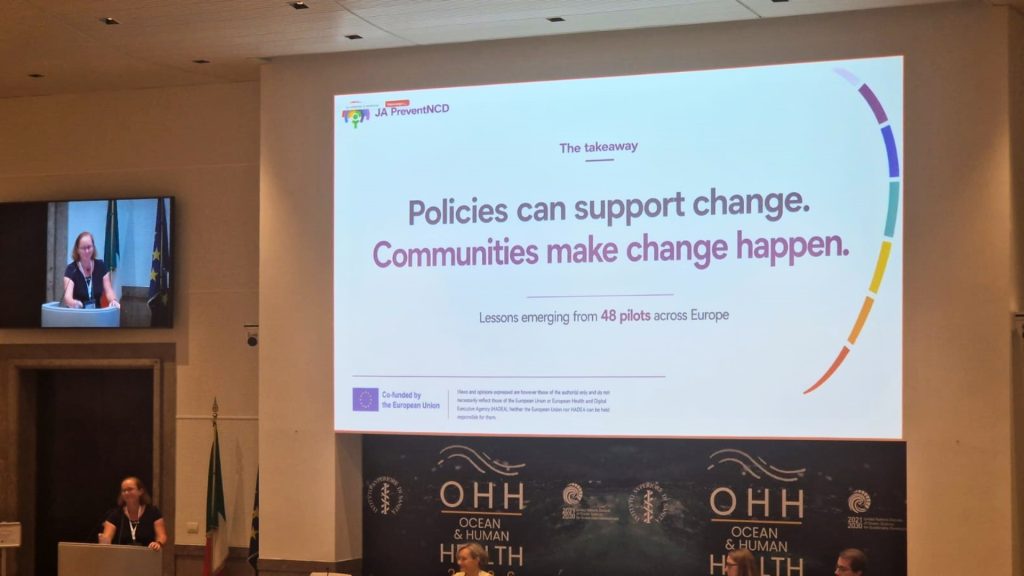
One of the programme highlights was a presentation by Assoc. Prof. Katarzyna Brukało entitled „Building local capacities for NCD prevention: where policies meet everyday life”. In her role as co-leader of the work area focused on creating healthy living environments, she summarised the key findings from 48 pilot actions implemented across Europe.
She highlighted that local communities already possess numerous assets, including knowledge, experience, collaborative networks and committed stakeholders. Cross-sectoral cooperation enables these resources to be transformed into concrete health promotion activities. However, the sustainability of initiatives remains the greatest challenge, as launching activities is often easier than maintaining them over the long term. She also emphasised that while health policies can create the conditions for change, it is local communities that ultimately make change happen.
The second day of the meeting was primarily dedicated to parallel sessions, allowing participants to engage in more in-depth discussions and work within their respective thematic areas.
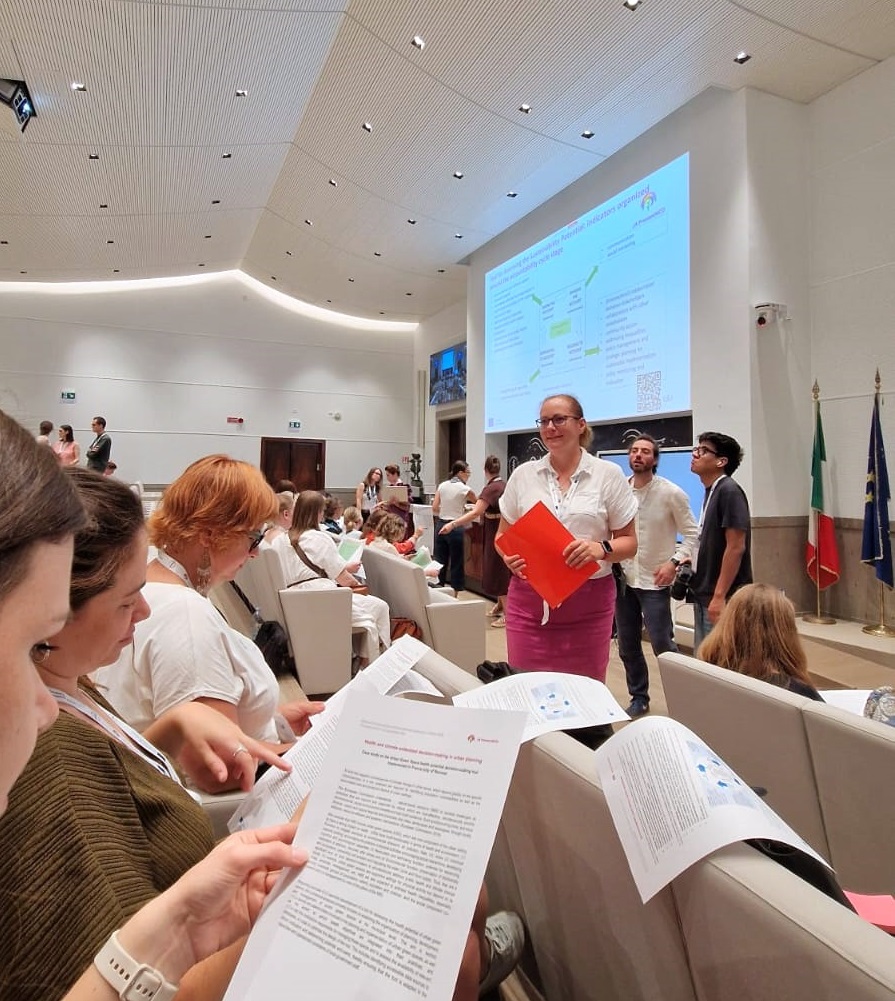
Assoc. Prof. Katarzyna Brukało led a workshop on integrating health and climate considerations into urban planning processes. The workshop was held as part of the session “How to ensure sustainability of public health policies and practices: Framework for a Sustainability Plan”.
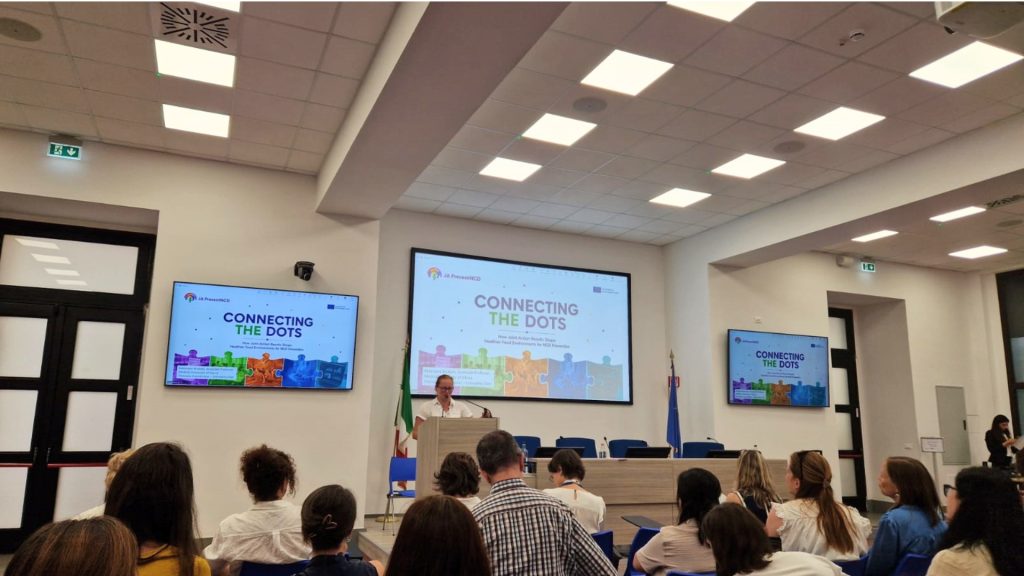
In addition, as the thematic coordinator for the healthy nutrition area, she moderated the parallel session “Shaping Healthier Food Environments to Prevent NCDs”.
During the session, participants discussed how activities implemented within JA PreventNCD can contribute to creating healthier food environments and support the prevention of non-communicable diseases. At the invitation of Assoc. Prof. Katarzyna Brukało, experts from Denmark, Belgium, Croatia and Norway shared their experiences and insights during the session.
Key topics discussed during the session included:
- policies and incentives promoting healthier food choices,
- the role of everyday food environments,
- health inequalities and community-level action,
- approaches to preventing non-communicable diseases,
- monitoring and translating scientific evidence into practice.
On the third day, the parallel sessions continued. The meeting concluded with a joint closing session, during which participants watched a short video presenting the first year of the project, shared their observations and experiences, and reflected on the key outcomes of the meeting.
The meeting also provided an opportunity to plan future activities related to policy dialogue, capacity building, communication and dissemination of project results, as well as preparations for continued European cooperation in the field of chronic disease prevention.
The exchange of experiences and good practices among partners from across Europe enhances the effectiveness of efforts in health promotion, healthy nutrition and the prevention of non-communicable diseases. International cooperation is a cornerstone of building healthier societies and more resilient public health systems. The active involvement of the Medical University of Silesia in these initiatives therefore plays an important role in shaping the future of public health in Europe!