“Health is not just a genetic code, but also a postal code.”
This sentence accurately reflects the approach to public health in Europe.
Our health is greatly influenced by the environment we live in every day – what products are available in stores, what meals look like in schools or hospitals, and whether the spaces around us support physical activity and healthy choices.
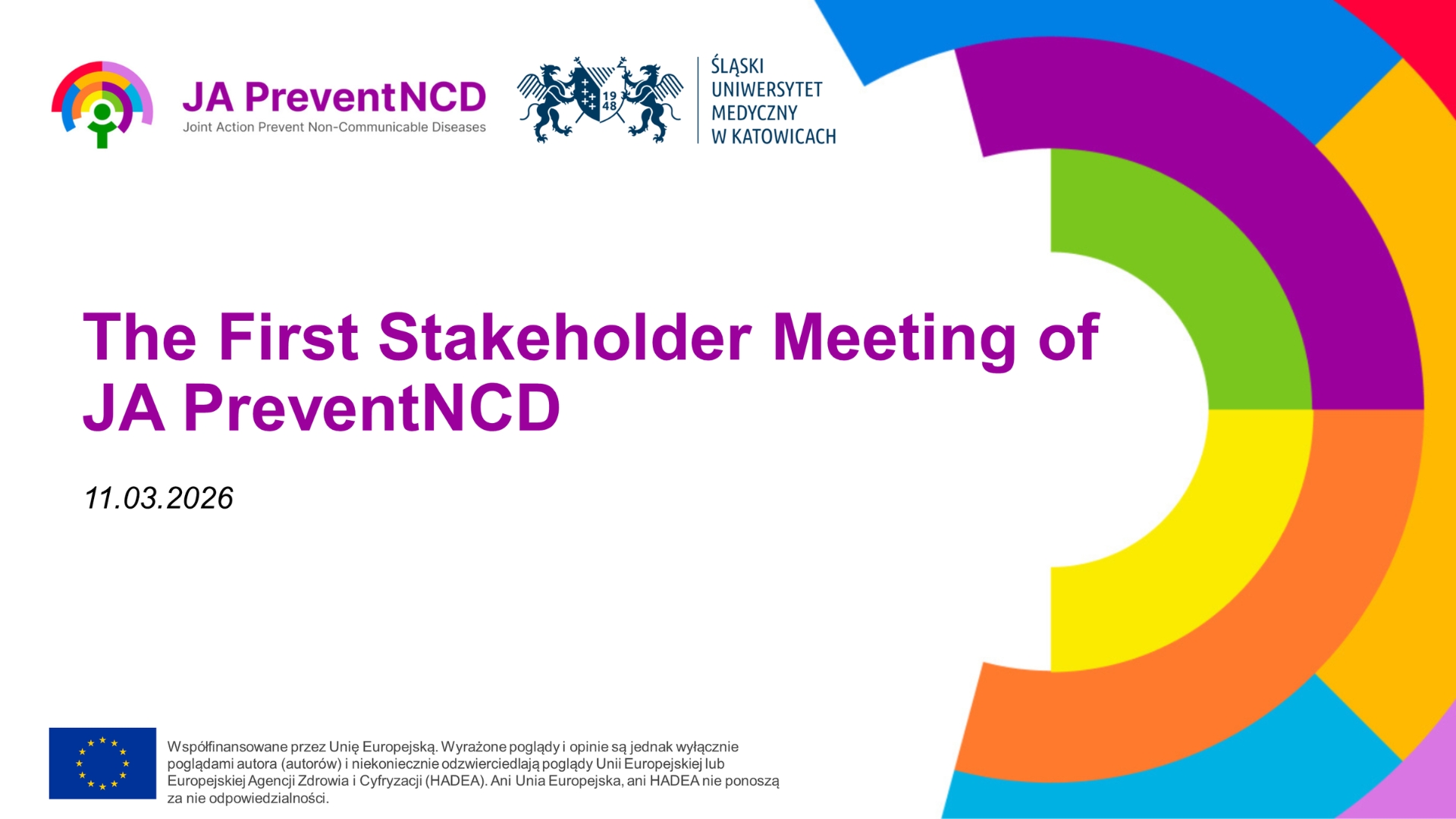
This is what we discussed during the First Stakeholders Meeting of the JA Prevent NCD project, which took place online on March 11, 2026, and was organized by the Medical University of Silesia in Katowice. The meeting brought together representatives of public institutions, local governments, the scientific community, and organizations working in the field of public health.
The meeting was opened by Vice-Rector for Science at the Medical University of Silesia Professor Oskar Kowalski, MD, PhD and Katarzyna Brukało, PhD, Assoc. Prof. at the Medical University of Silesia and Project Coordinator in Poland.
Participants were also welcomed by the Project Partners in Poland - Mayor of the City of Zabrze, Kamil Żbikowski, representatives of the City of Rybnik and Anna Bulzacka-Bogucka, Project Advisor at HaDEA.
The meeting was attended by representatives of the Ministry of Health, the National Health Fund, the Chief Sanitary Inspectorate, local authorities, as well as schools, kindergartens, foundations, associations, scientific societies, and other institutions involved in public health initiatives.
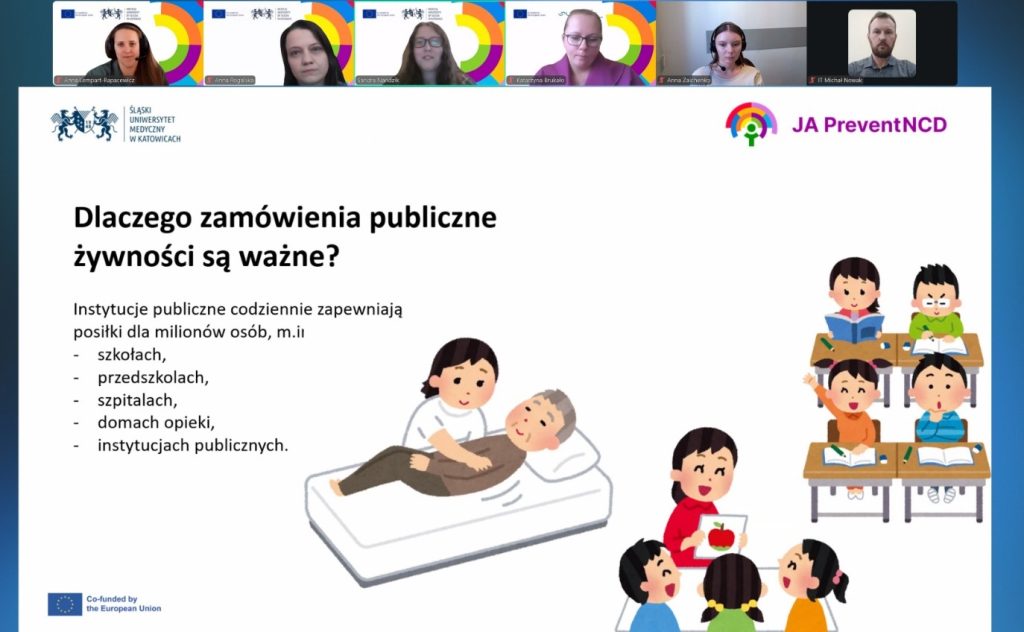
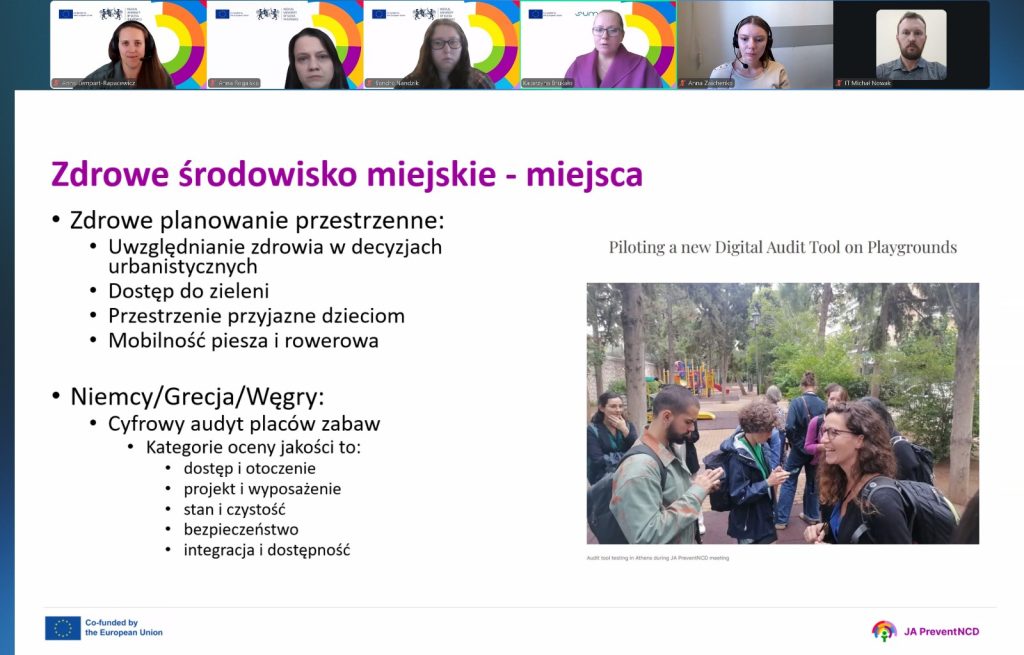
The discussion focused on local and regional actions that, within the framework of the JA PreventNCD project, can have a real impact on residents’ health – such as monitoring the food environment, developing sustainable public food procurement, and creating health-promoting spaces, including through the development of green areas, bike paths, and smoke-free zones.
Public health is not achieved alone. To effectively prevent chronic diseases, it is necessary to build collaboration between science, public administration, local governments, and social organizations.
The attendance and engagement of the participants were very encouraging and give great hope for the future of this collaboration. This was the first stakeholders’ meeting of the project, but certainly not the last.
We thank everyone for their participation and look forward to continued collaboration!